The Bloom Is Here...Already

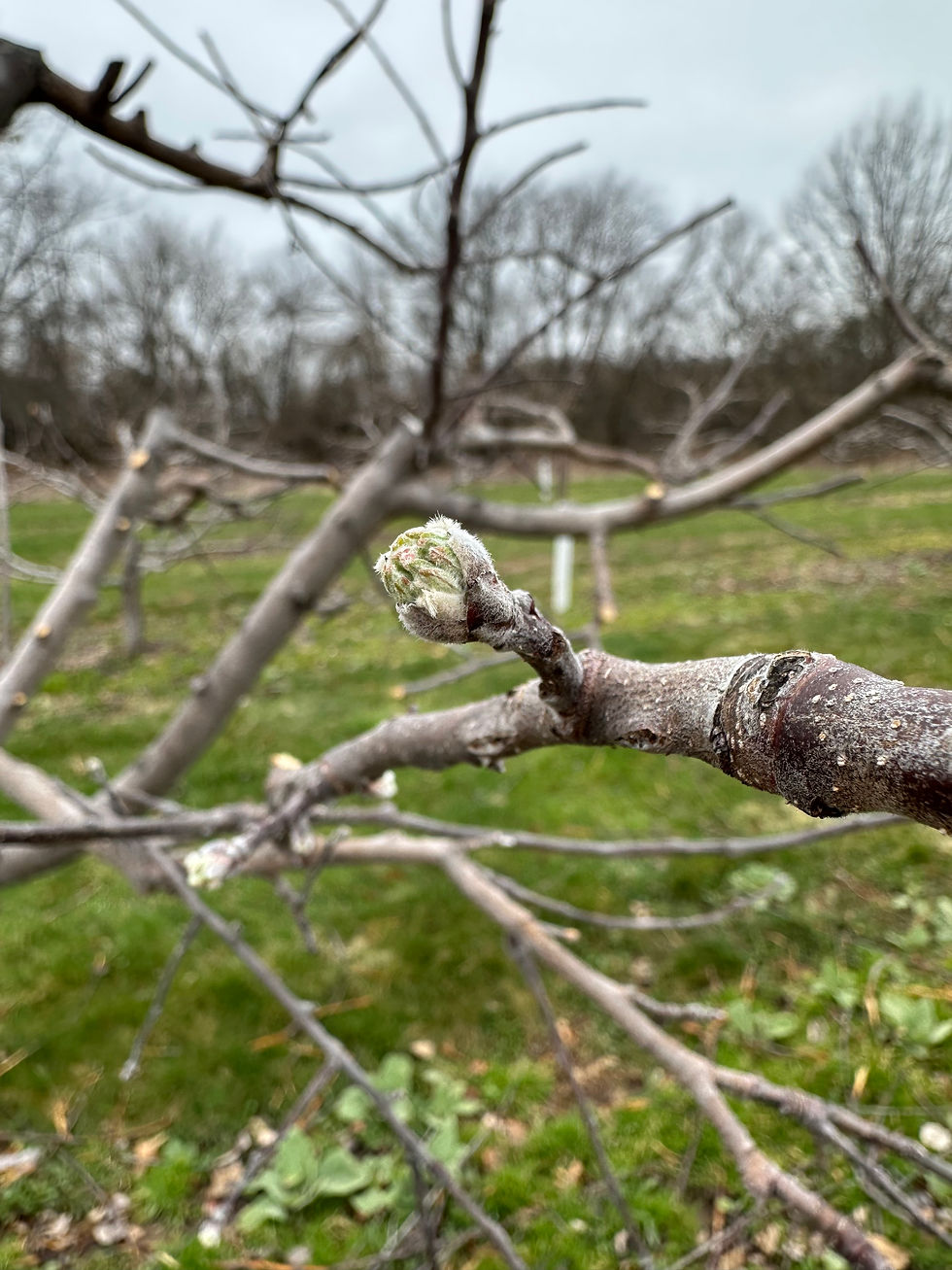
Welp, that was fast. During a very unique week of weather (heat, rain, and tornados) many of our trees rushed from bud break to bloom. This creates a delicate situation for us as our schedule can be thrown out the window.
What usually takes a few weeks for the trees to go from 1/4 inch green, to 1/2 inch green (tiny ears), to tight cluster, to pink, to bloom was accelerated in some of our varieties. Others are still lagging behind. This means that our fungicide applications (to keep our apples disease free) that usually correspond to these stages must be made more frequently to some trees and less often to others.
It also means that we are likely to have a longer bloom season that will come in "waves" with some varieties in full bloom now while others will still take a week or two. Apple trees require a second variety to polinate correctly. Two Honeycrisp trees in isolation could not produce any fruit regardless of the number of blossoms and pollinator visits. By design, we have varieites interspersed throughout the orchard to help with this. As long as there is more than one variety in bloom at the same time somewhat near each other we should get fruit.

To help with our polination we hired some help. Each year we bring in some bumble bees to ensure we get fruit. Bumble bees are able to fly much further distances in worse weather than honey bees. Additionally, every few days we move them around to where the bloom is heaviest. Each potential future apple requires 2-3 visits from an polinator to effectively fertilize the 8-10 seeds need to produce symmetric, high quality fruit.
However, counterintuitively, we also worry about having too much pollination. Each flower in the picture above has the poential to turn into an apple. Each bud break pruduces 5 flowers. Apple trees, while strong can break if they are carrying too much fruit. And even if there isn't a full branch break, an overloaded tree will produce small fruit as there are too many apples fighting for limited resources. To fight this we go through several rounds of "thinning" out the apples as we observe the number of flower, then number polinated, then eventually watching the apples. The earlier and better this is done, the better our return bloom (next year's flowers) will be. Apples tend to alternate flower and leaf production (biennial bearing) and this is how we attempt to even this out. Some of you may remember our bumper crop in 2024 followed by last year's limited production, this is one of the reasons why. We're still learning.
Comments